 Increase
customer satisfaction by offering personalized call treatment.
Increase
customer satisfaction by offering personalized call treatment.How AI Contact Insights Improve Efficiency, CX, and Agent Performance
by Anastasia Micic | Published On April 7, 2026
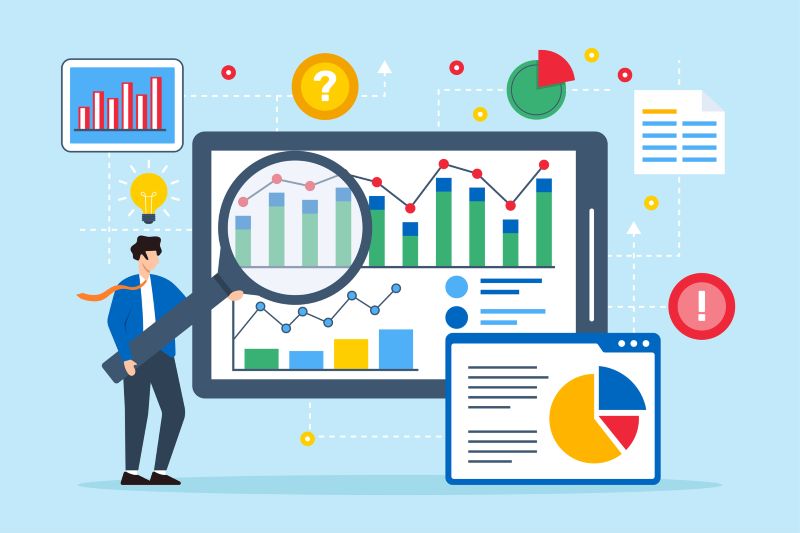


AI contact insights give contact centers full visibility into every interaction, unlocking faster solutions, happier customers, and more efficient operations.
If you’ve ever sat in on a quality review session, you know how limited it feels. You listen to five calls. Maybe ten if you have time. You score them, write notes, and move on. Meanwhile, thousands of other conversations happen that week, and no one hears them.
Companies struggle when they only see part of the picture.
Leaders talk about important metrics, like handle time, abandon rate, and service level, but they don’t tell you why customers are irritated, why cases keep getting reopened, or why the same billing question shows up every single Monday morning.
What’s starting to change is the level of visibility businesses have. AI contact insights save companies from the issues that arise when they focus on sampling just a few interactions at a time. With intelligent tools, every call, chat, and message becomes part of a searchable record. Patterns show up faster, coaching becomes more specific, and root causes stop hiding behind averages.
That’s how CX strategies evolve.
What Are AI Contact Insights?
Most contact centers review a tiny fraction of their interactions. Quality teams sample a few calls per agent each month. The rest of the conversations sit in storage unless a complaint forces someone to go digging. That creates blind spots.
AI contact insights close that gap by automatically analyzing every interaction across voice and digital channels. Calls are transcribed, while chats and emails are parsed. The system tags contact drivers, identifies sentiment shifts, checks for required compliance language, and generates structured summaries.
What changes for companies investing in analytics are coverage and consistency levels.
Traditional QA relies on human scoring. That means variance. One supervisor is strict. Another is lenient. AI applies the same criteria across 100 percent of interactions. It does not get tired. It does not skip calls because of time pressure.
McKinsey says service organizations are sitting on large volumes of unstructured customer data that rarely get used effectively. When AI is applied across interactions, some organizations have reported cost per call reductions of up to 50 percent while improving customer satisfaction.
Instead of reviewing a sample and hoping it represents the whole, leaders can see patterns across the entire operation.
- Repeat billing complaints
- Escalation triggers
- Missed disclosures
- Coaching gaps
Those insights unlock opportunities.
What Types of AI Contact Insights Can Teams Capture?
Most contact centers measure what’s easy to pull from a dashboard. Fewer measure what’s actually driving repeat calls, escalations, or churn. When interaction data is reviewed at scale, the perspective shifts. Instead of relying on whatever disposition code an agent picked at the end of a call or waiting for survey feedback, AI contact insights look at the full conversation across voice and digital channels.
Conversation-Level Insights
Across thousands of interactions, consistent patterns start to stand out:
- True contact drivers: AI reviews transcripts and tags the real reason for contact. This often exposes gaps between what agents select in a CRM and what customers are actually calling about.
- Where frustration begins: Rather than labeling a call as positive or negative, AI tracks when sentiment shifts. For example, if frustration spikes immediately after pricing explanations, that points to a policy or communication issue, not an agent issue.
- Repeat-contact patterns: If customers reference prior calls or unresolved cases, those mentions can be tracked at scale. This provides early warning when first contact resolution is weakening.
- Cancellation and competitor language: Spikes in phrases tied to switching providers or closing accounts often appear before churn rates rise in reporting.
- Emerging issue detection: A sudden increase in similar complaints, such as login failures after a software update, becomes visible within days instead of weeks.
Agent Performance Insights
The same interaction analysis highlights patterns on the agent performance side:
- Missed disclosures and compliance gaps: Instead of listening to a small batch of calls, systems can review every interaction for required language. That cuts down the odds of unpleasant audit findings later.
- Inconsistent explanations: If agents are describing the same policy in different ways, transcript analysis brings that to light fast.
- Resolution quality: When a case is marked closed, but the customer calls back about the same issue, that pattern doesn’t stay hidden.
- After-call work reduction: Auto-generated summaries mean agents aren’t typing everything from scratch. Several providers have reported noticeable drops in after-call time once summaries are automated.
How Contact Centers Benefit From AI Contact Insights
Insights don’t matter unless something changes because of them.
Most centers can generate reports in seconds about handle time, service levels, and abandonment rates. What those reports don’t show is why the same problem keeps resurfacing or why a conversation that starts calmly suddenly turns tense. The numbers tell you what happened. They don’t tell you what triggered it.
That’s where AI contact insights make the biggest difference. They can help teams:
1. Improve Customer Experience
Customer experience problems tend to be repetitive. A confusing fee explanation, an annoying transfer loop, or policy that sounds different depending on who answers the phone.
When insights come from every conversation, those weak spots become measurable.
Shorter handle time without cutting corners
Handle time drops when agents don’t have to dig for answers and customers don’t have to repeat their story. Intent detection gets customers to the right place faster. Context from previous interactions shows up immediately thanks to CRM integrations. That alone removes minutes from a call.
AI contact insights can also give businesses the information they need to ensure:
- Fewer unnecessary transfers
- Faster issue identification at the start of the call
- Less repetition across channels
- Clearer handoffs between voice and digital
- Higher first contact resolution
More personalized conversations without slowing things down
Real personalization in a contact center isn’t about saying someone’s name. It’s about knowing what already happened. If a customer called twice about the same billing issue, that context changes the tone immediately. Agents shouldn’t start from zero.
AI-driven tools carry context across channels and route customers based on intent. That lowers effort right away. When someone calls in and doesn’t have to repeat their history, it feels like progress. Satisfaction tends to follow when:
- Agents see prior issues instantly
- Fewer “can you repeat that?” moments
- More consistent explanations
- Less friction across channels
Catching frustration before it turns into churn
Escalations rarely happen out of nowhere. You can hear them building. Customers might start a conversation neutral, then frustration starts to build up after a policy explanation.
When that pattern appears across hundreds of calls, you start to see the process problem. The early insights you get lead to:
- Fewer surprise escalations
- Faster script adjustments
- Stronger save conversations
- Churn signals that show up before monthly reports
2. Boost Agent Productivity and Performance
Agent burnout doesn’t usually come from talking to customers. It comes from admin work, rework, and inconsistent feedback. AI contact insights help smooth those edges.
Cutting down after-call work
Manual summaries eat time. They’re inconsistent. They vary by writing style.
Auto-generated summaries from AI copilots change that. Agents review and adjust instead of starting from scratch. Several AI contact center providers report noticeable drops in after-call time once summaries are automated, especially in high-volume voice environments.
Over thousands of calls, that reclaimed time matters. Agents benefit from:
- Shorter wrap-up time
- Cleaner case documentation
- Fewer missed follow-ups
- Lower mental load between calls
Coaching that feels fair
Traditional QA reviews a handful of calls per month. That leaves room for surprises.
When every interaction is analyzed, patterns show up clearly. If an agent consistently struggles explaining one policy, that’s visible. If they miss a disclosure step repeatedly, that’s visible too.
McKinsey has pointed to cases where AI-supported training reduced time to proficiency by 20 to 30 percent in service operations. Improvements like that don’t happen from generic coaching sessions. They happen when training is based on real patterns from real conversations. Teams get:
- Coaching based on real trends
- Clearer performance expectations
- Faster ramp-up for new hires
- Less subjectivity in QA
Reduced Operational Costs
Cost control isn’t about slashing headcount. It’s about removing waste.
When you can see the top drivers across thousands of interactions, you know which requests are repetitive and low risk. That means you make better decisions on what to automate first. Teams deal with lower inbound volume from repeat issues, and leaders see reduced cost per contact.
Repeat callers don’t have to start from scratch, either. When insights from prior conversations surface instantly from the CRM, agents can pick up where the last interaction left off.
4. Strengthen Quality Assurance and Compliance
Sampling works until companies start to scale. Missing required language in even a small percentage of calls can create exposure. With AI contact insights, you benefit from:
Monitoring every interaction
AI can scan every call and digital conversation for required verification steps, disclosures, and restricted phrases. The right tools can catch compliance gaps early. Instead of finding a pattern during an audit, teams can flag gaps shortly after the interaction happens.
Most leading AI analysis solutions ensure:
- 100 percent monitoring coverage
- Early detection of disclosure issues
- Reduced regulatory exposure
- Faster corrective action
Some tools also use copilots to nudge employees in the flow of work, reminding them when they miss a disclosure, or walking them through the steps required in a conversation to maintain compliance.
Reducing QA overhead
Supervisors spend hours listening to calls. When scoring can be automated across all interactions, that time shifts toward coaching and process improvement. Companies see:
- Less time spent on manual call reviews
- Faster feedback cycles
- More consistent scoring standards
5. Gain Strategic Business Insights
Contact centers sit closer to customer reality than almost any other department.
Sales hears objections. Product sees usage data. Marketing tracks campaigns. But the contact center hears frustration, confusion, and comparison language in real time. That’s raw signal.
When AI contact insights analyze transcripts collectively, those signals stop being isolated anecdotes and start becoming measurable trends.
Product and service feedback in real time
A product issue rarely starts with a formal escalation. It starts with repeated phrases.
- “This didn’t work after the update.”
- “I’ve tried that three times.”
- “Why did this change?”
When those phrases cluster across hundreds of interactions, that’s not random noise. That’s a pattern forming.
Instead of waiting for survey data or quarterly performance reviews, leadership can see spikes within days. If a feature release triggers a surge in confusion or complaints, that shows up immediately in transcript analysis. Product teams can respond faster, whether that means patching functionality, clarifying instructions, or adjusting rollout plans.
Competitive mentions and switching language
Customers don’t hold back during service interactions.
They mention competitor pricing. They compare features. They say they’re considering switching. Those statements often appear before churn shows up in revenue reporting.
AI can track phrases tied to competitor names, cancellation requests, or downgrade language across all interactions. If competitor mentions spike after a pricing adjustment, that’s a strategic signal. If switching language clusters in a specific region or product line, that’s another.
Data informing roadmap and messaging decisions
Sometimes the problem isn’t the product. It’s the explanation.
When customers keep misinterpreting the same policy, that’s not bad luck. It usually means the wording is unclear. If agents are constantly rephrasing the same explanation, the documentation probably needs attention. That kind of insight is useful beyond the contact center. Marketing can adjust site copy and onboarding emails. Product teams can rethink feature names or tweak in-app guidance.
When conversation data is tied directly to product and marketing discussions, it grounds strategy in real customer language rather than assumptions.
A broader view of customer contact data speeds up issue detection and sharpens strategic decisions at the same time. That’s when service analytics move beyond reporting and start influencing how the business evolves.
Challenges and Considerations
Most problems with AI contact insights don’t come from the technology itself. They show up in the setup and the expectations around it. Here are the pressure points teams run into.
Sensitive data handled at scale: Reviewing every transcript means personal and financial details are moving through the system constantly. Permissions, retention rules, and redaction settings need to be solid.
Treating AI output as final truth: Sentiment scores and intent tags are signals. They aren’t final judgments. In regulated conversations especially, people still need to apply context and make decisions.
Agent pushback: When teams hear every call is being analyzed, their reaction depends on how it’s positioned. If it feels like surveillance, adoption slows down quickly.
Chasing the wrong metrics: If handle time drops but repeat contacts rise, the operation hasn’t improved. Insights only matter when the right outcomes are tracked.
Where AI Contact Insights Are Headed
Right now, many teams use conversation data after the fact. A spike in complaints gets noticed in a weekly report. A compliance gap shows up during an audit. A churn pattern appears at the end of the quarter. That lag is shrinking.
More contact centers are moving toward real-time analysis. Instead of waiting for post-call reports, signals surface during the interaction. Required language prompts appear while the call is live. Escalation risk is flagged before a supervisor request. Case summaries are drafted before the agent even reaches wrap-up.
The contact centers that get the most out of AI contact insights will be the ones using conversation data to fix root causes, simplify policies, and make life easier for agents and customers alike. If you’re ready to see what intelligent analytics can do for your business, request a demo of ComputerTalk today.
More from our blog
 Isolated contact center solutions are expensive for businesses and make it harder to meet changing customer needs.
 Customer experience is crucial for any business, especially customer-facing organizations like retail companies. In this dynamic and highly competitive business environment, delivering high-quality customer service is a critical factor for success.
 My interview process here was memorable. It was cold and rainy, and I was wrecked with nerves. When I got to the boardroom, the nerves only got worse – seeing Laura, plus three new intimidating figures, all for my first...